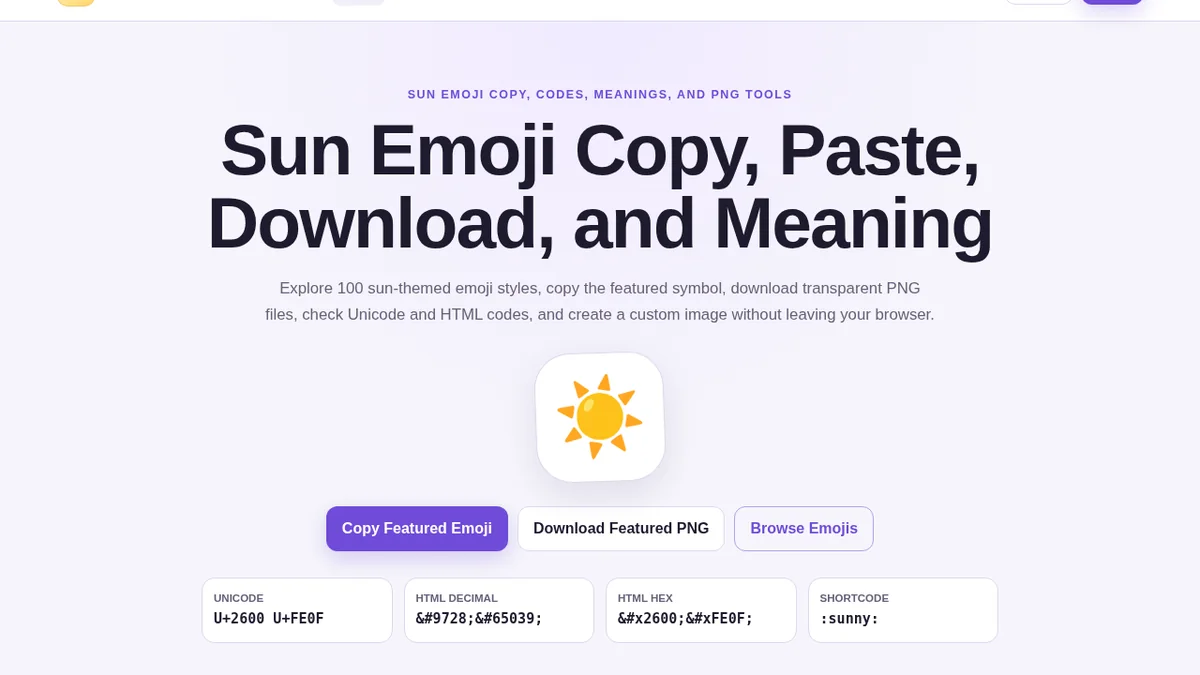
Understand the Sun Emoji meaning across weather updates, greetings, relationships, positive messages, design, and cultural context. This article explains practical context, platform behavior, and reliable ways to use the symbol clearly.
What the sun symbol communicates
The sun emoji usually communicates brightness, warmth, daylight, and positive energy. In a weather message it is literal: the sky is clear or the day is expected to be warm. In a personal conversation it often becomes emotional shorthand for optimism, encouragement, friendliness, or a fresh start. The meaning is rarely difficult to understand because the visual image is familiar across cultures, but the exact tone still depends on the words around it.
A single sun can soften a practical update, make a greeting feel warmer, or give a caption a seasonal mood. It may also represent the person who brings joy to someone else, especially when the message already contains affectionate language. The symbol does not automatically indicate romance; it can be friendly, family-oriented, motivational, or purely decorative.
Literal weather and seasonal meaning
The most direct interpretation is sunny weather. People use it in forecasts, travel plans, outdoor event reminders, and messages about heat or daylight. During summer it can signal holidays, beaches, long days, outdoor meals, and bright photography. During winter it may express relief when clear weather returns.
When the sun appears beside clouds, rain, or a rainbow, it often describes changing weather rather than a feeling. A sun-and-cloud pairing suggests mixed conditions, while a sun-and-rainbow pairing can suggest hope, recovery, or beauty after difficulty.
Emotional and relationship meaning
In emotional conversations the sun can stand for someone’s positive influence. Phrases about “bringing light” or “making the day brighter” naturally match the symbol. Friends use it to encourage each other, parents use it in warm messages, and partners may use it as an affectionate nickname or sign of appreciation.
Tone matters. A bright symbol after a short reply can make the message feel more welcoming. Used after criticism or bad news, however, it may seem dismissive. The safest approach is to pair it with clear words when the subject is sensitive.
Design, branding, and aesthetic use
Creators often use the sun as a visual theme for wellness, travel, photography, gardening, energy, and lifestyle content. It can act as a small divider in a bio, a repeating marker in a list, or a highlight in a caption. The classic sun has a simpler, more neutral appearance than the smiling sun face, so it works well in professional or minimalist layouts.
A transparent PNG can provide more control over size and placement in slides, thumbnails, or personal graphics. Keep enough contrast around the image and avoid using it as the only way to communicate important information.
How to interpret it accurately
Read the whole message before assigning a meaning. Weather words point to a literal interpretation. Compliments and greetings point to warmth or optimism. Travel and beach language point to summer or vacation. A username or bio may use the symbol only for visual identity.
Platform artwork can change the visual tone slightly, but the underlying meaning remains stable. The classic character may appear as a monochrome black sun in text-style fonts and as a colorful yellow sun in emoji-style fonts.
Common misunderstandings
The sun should not automatically be read as romantic, spiritual, or sarcastic. Those meanings can occur, but the surrounding sentence and relationship are more reliable than the symbol alone. A weather update is usually literal, while a compliment may be emotional. If a message could affect someone seriously, use complete words instead of expecting the emoji to carry the whole meaning.
Another misunderstanding is that a black sun symbol has a completely different Unicode meaning. In many cases it is simply the same core character shown in text presentation. Fonts, variation selectors, and application settings determine whether the result looks monochrome or colorful.
Accessibility and clear communication
Screen readers may announce the character as “sun” or “sun with rays.” A single symbol usually works well, but repeated decorative strings can interrupt the reading flow. Place the symbol after a clear phrase rather than replacing important information such as a date, temperature, warning, or location.
For images, add alternative text that explains the purpose. If the sun is decorative, an empty alt value may be suitable in HTML. If it indicates weather or mood, describe that meaning in a short phrase.
Final takeaway
The Sun Emoji is most effective when its meaning is supported by clear words and appropriate context. Use Unicode for editable text, use the copy controls for convenience, and generate a transparent PNG only when a fixed image is more suitable than live text.